


What is acrylic flooring for playgrounds?
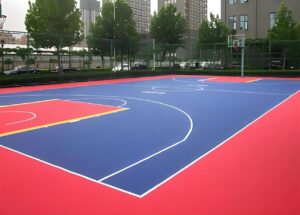
Acrylic flooring for playgrounds is a type of artificial flooring specially designed to cover the floors of outdoor and indoor playgrounds, especially tennis, basketball, handball, and many other sports. This acrylic flooring is made of multiple layers of high-quality acrylic material, which is characterized by flexibility and hardness at the same time, providing a safe and suitable surface for practicing various sports activities.
Acrylic flooring is a preferred choice for many clubs and sports centers due to its many advantages, as it combines excellent performance, aesthetic appearance, and ease of maintenance, making it one of the most popular types of flooring in modern stadiums.
The advantages of acrylic flooring over other types
1️⃣ Longer lifespan
Acrylic flooring is characterized by its ability to withstand heavy use for long periods without rapid wear or damage, which gives it a clear advantage over some other types of flooring that are more quickly affected by friction and constant pressure.
2️⃣ Strong resistance to weather conditions
Unlike some flooring that is affected by rain or direct sunlight, acrylic flooring provides excellent protection against moisture and high temperatures, making it suitable for outdoor playgrounds in various climatic conditions.
3️⃣ Safe, non-slip surface
Acrylic flooring provides optimal friction, preventing players from slipping and reducing the risk of injury compared to some rubber or concrete floors, which can be slippery in certain conditions.
4️⃣ Multiple colors and professional appearance
Unlike traditional flooring with limited colors such as artificial turf or asphalt, acrylic flooring comes in a variety of color options that give the playground a professional and attractive look that matches the visual identity of the place.
5️⃣ Low maintenance costs
Acrylic flooring is easy to clean and can be repainted when needed at a low cost, while other types, such as artificial turf, may require complete replacement when large sections are damaged.
6️⃣ Compatibility with various sports
Acrylic flooring is a versatile option, suitable for tennis courts, basketball courts, handball courts, and more, while some other flooring is designed for a specific sporting purpose only.
Our Facebook page
Acrylic playground flooring is the best choice | Features and Standards
Quality standards for acrylic flooring for playgrounds
1️⃣ Quality of raw materials
The quality of acrylic flooring depends on the purity of the raw materials used in its manufacture, such as high-quality acrylic that is free of impurities and harmful substances. The more authentic and certified the materials are, the more resistant the flooring will be to weather conditions and heavy use.
2️⃣ Resistance to climatic factors
Good flooring should withstand direct exposure to sunlight, rain, moisture, and temperature changes without cracking or discoloring over time.
3️⃣ Appropriate friction level
Sports fields require a surface that provides the perfect balance between slip resistance and ease of movement. Therefore, the floor must have moderate friction that allows players to move freely and safely at the same time.
4️⃣ Floor thickness and number of layers
Acrylic systems typically consist of several layers, including a base coat, flexible acrylic layers, and a colored top coat. Standard thicknesses for each layer must be adhered to in order to ensure durability and minimize damage from impact and abrasion.
5️⃣ Quality of installation and execution
Even with the best materials, incorrect installation can lead to problems such as ripples or cracks. Therefore, installation must be carried out by specialists using the appropriate equipment.
6️⃣ Reliance on international standards
It is preferable to choose acrylic flooring that carries quality certificates and standards that comply with international bodies approved in the field of playground equipment, such as the International Tennis Federation (ITF) or FIFA for some other games.
قراءة المزيد..أفضل أنواع نجيل طبيعي للملاعب الرياضية
Why is acrylic flooring the best choice for playgrounds?
Acrylic flooring has become one of the most commonly used types of flooring in sports fields, whether in clubs, schools, or recreational centers, thanks to its unique properties that combine high performance, safety, and ease of maintenance. Here are the top reasons why it is the ideal choice for modern playgrounds:
1️⃣ High durability that can withstand heavy use
Acrylic flooring is characterized by its high resistance to pressure caused by constant movement and friction, making it suitable for playgrounds that see daily and frequent use without losing its properties or deteriorating quickly.
2️⃣ Resistance to different climatic conditions
Unlike some types of flooring that are affected by weather fluctuations, acrylic flooring can withstand direct sunlight, rain, and moisture without cracking or discoloring, making it ideal for both outdoor and indoor courts.
3️⃣ Safe surface reduces the risk of injuries
Acrylic flooring provides an excellent balance between flexibility and stability, preventing excessive slippage and keeping players’ feet stable, reducing the chances of falls or joint injuries.
4️⃣ Professional appearance in a variety of colors
Acrylic flooring comes in a wide range of bright colors, giving courts a modern and professional look, as well as the ability to mark playing lines accurately and clearly.
5️⃣ Easy maintenance and economical cost
Acrylic flooring is easy to clean and can be repainted or repaired without having to replace the entire floor, making it an economical choice compared to some alternatives such as artificial turf or rubber.
6️⃣ Suitable for multiple types of sports
Whether it’s tennis courts, basketball courts, handball courts, or even school training courts, acrylic flooring adapts to different sports thanks to its versatile design.
Acrylic Flooring Applications
Acrylic flooring is one of the most widely used types of flooring in the sports world due to its practicality and adaptability to various sports activities. Thanks to its durability and non-slip surface, it has become the preferred choice to equip many stadiums, sports and entertainment facilities. Here are its most prominent uses:
1️⃣ Tennis courts
Acrylic flooring is the first choice for tennis courts, as it provides a flat surface and adequate ball bounce, ensuring professional performance for players in both official matches and training sessions.
2️⃣ Basketball courts
Basketball players need a safe floor that prevents slipping and can withstand rapid movements and repeated jumping, which acrylic flooring provides thanks to its flexible and durable properties.
3️⃣ Handball and volleyball courts
Thanks to their high impact resistance, acrylic floors are widely used in handball and volleyball courts, where they help absorb shocks and reduce the risk of injury during play.
4️⃣ Running tracks and training trails
Acrylic flooring can be used to cover running tracks or training tracks in clubs and schools, as it provides a suitable surface for running and reduces stress on the joints.
5️⃣ Schoolyards and recreational areas
Acrylic is not only used in professional sports fields, but also in school playgrounds and recreational areas to provide a safe environment for children that is resistant to weather conditions.
6️⃣ Multi-purpose sports fields
In some sports facilities, multi-purpose fields are created for five-a-side soccer, basketball, tennis, and more, and acrylic flooring is the perfect choice due to its adaptability to different games.
How to install acrylic flooring for playgrounds
Installing acrylic flooring for playgrounds requires precision and expertise to ensure a durable, safe, and high-performing floor. The process goes through a series of sequential stages from surface preparation to the application of the final colored layer. Here are the basic steps for installing acrylic flooring:
1️⃣ Preparing the base surface
Clean the surface of dust, oils, and stuck-on stuff that might mess with how the layers stick together.
Repair cracks and gaps using special materials to ensure a smooth, flawless surface.
Level the floor to correct any slopes or unevenness using cement or specialized materials.
2️⃣ Apply primer
The surface is coated with a primer to increase the adhesion of the subsequent acrylic layers and ensure the floor’s stability for a long time.
3️⃣ Installation of the flexible acrylic layer (Cushion Layer)
This layer adds flexibility to the floor, helping to absorb shocks and reduce the risk of injury during play. It is often applied in several stages to increase its thickness.
4️⃣ Applying the hard acrylic layer (Resurfacer)
This layer is applied to strengthen the surface and make it more resistant to friction and heavy use, and it helps prepare the floor for the final layer.
5️⃣ Colored top coat
Acrylic paints designed for sports fields are used to cover the surface, with the ability to mark lines and symbols specific to the game (such as tennis or basketball lines) with high precision.
6️⃣ Drying and final inspection
Leave the floor for a specified period of time until it is completely dry and ready for use.
A thorough inspection is carried out to ensure that the pitch is free of any defects or uneven areas before it is opened to players.
The difference between acrylic flooring and epoxy flooring
When equipping sports fields or areas, the choice is often between acrylic and epoxy flooring, as they are two of the most commonly used types of industrial flooring. Although they share some similar characteristics, each has advantages and disadvantages that make them suitable for specific uses. The following are the main differences between the two types:
1️⃣ Nature and composition of the material
Acrylic flooring: Made from water-based acrylic polymers, it usually consists of several flexible and rigid layers that give it high resistance and a non-slip surface.
Epoxy flooring: Made from two-component epoxy resins (resin and hardener), making it more durable and closer to an industrial chemical-resistant finish.
2️⃣ Main uses
Acrylic: Mainly used in outdoor and indoor sports fields such as tennis, basketball, and running tracks thanks to its flexibility and shock absorption.
Epoxy: Most commonly used in factories, warehouses, parking lots, and industrial areas, it can also be used in some indoor sports halls that do not require significant shock absorption.
3️⃣ Level of security and friction
Acrylic: Provides a non-slip, safe surface for players, reducing the likelihood of injuries from falls.
Epoxy: May be less safe in athletic environments, especially when exposed to water, as its surface can become more slippery.
4️⃣ Weather resistance
Acrylic: Excellent resistance to sunlight, humidity, and rain, making it ideal for outdoor courts.
Epoxy: Less resistant to UV rays and may discolor or crack when exposed to prolonged sunlight, so it is best used indoors.
5️⃣ Flexibility vs. Rigidity
Acrylic: Relatively flexible, absorbs shocks and reduces pressure on players’ joints.
Epoxy: More rigid, does not provide good shock absorption, making it less than ideal for sports that require quick movement and repeated jumping.
6️⃣ Maintenance and repair costs
Acrylic: Easy to maintain, can be repainted or specific parts repaired at low cost.
Epoxy: May require more expensive maintenance and complete reapplication of the surface in case of damage or cracks.
The role of acrylic flooring in enhancing safety and security within sports venues
Acrylic flooring plays an important role in providing a safe environment for athletes during various sports activities. In addition to providing a professional appearance, its technical properties help reduce the risk of injury and improve the overall playing experience. Here’s how acrylic flooring helps promote safety and security on the field:
1️⃣ Non-slip surface reduces the risk of falling
One of the most notable features of acrylic flooring is its ability to provide optimal friction, preventing excessive slippage even when the surface is wet or damp, thereby protecting players from falls and serious injuries.
2️⃣ Shock absorption and joint protection
Some types of acrylic flooring contain flexible layers that absorb shocks caused by repeated running and jumping, reducing stress on players’ joints and protecting them from chronic injuries.
3️⃣ Flat surface free of imperfections
Proper installation of acrylic flooring helps to achieve a completely flat surface, preventing players from tripping or twisting their ankles due to pits or ripples that may be present in other types of flooring.
4️⃣ Crack and corrosion resistance
Over time, some floors may crack or wear down, posing a direct risk to players. Acrylic floors are highly durable and can maintain a safe surface for long periods without developing serious defects.
5️⃣ Clarity of play lines
The lines of the courts are painted on acrylic floors in clear and precise colors, which prevents confusion during matches and reduces accidents resulting from collisions or wrong decisions during play.
6️⃣ Fire and chemical resistance
Acrylic flooring is made from materials that are resistant to fire and certain chemicals, ensuring additional safety in the event of accidents inside stadiums or indoor sports centers
 Are You Looking for the Best Solutions to Equip your Fields with Artificial Turf?
 Call us now |
  Contact us via WhatsApp |