


Soft acrylic flooring is considered one of the most prominent modern solutions used in the construction of acrylic courts and sports facilities, thanks to its multiple advantages that combine durability, flexibility, and ease of maintenance. With the increasing demand for safe sports flooring suitable for various age groups, soft acrylic flooring has become the ideal choice for schools, clubs, and community playgrounds. In this article, we will review the most important characteristics of soft acrylic flooring, the benefits of its use, how to install it professionally, in addition to the most important technical standards that must be paid attention to during installation.
Also, learn about the types of acrylic flooring!
What is Soft Acrylic Flooring?
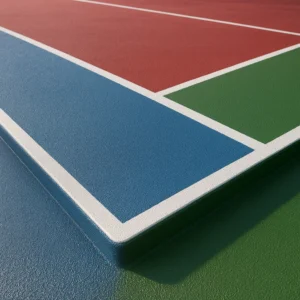
Soft acrylic flooring is a type of modern synthetic flooring widely used in open sports courts. It is characterized by its multi-layered flexible structure made of acrylic material mixed with special rubber compounds. These floors are designed to provide a soft and safe surface that absorbs shocks and reduces the risk of injuries, especially in children’s playgrounds and light sports activities.
Soft acrylic flooring is an ideal choice for school courts, community squares, and basketball and tennis courts, given its ability to withstand intensive use and its resistance to various weather conditions. Its installation is done on a cement or asphalt base, which gives it stability and durability that lasts for years with proper maintenance.
Our Facebook Page
Uses of Soft Acrylic Flooring
Soft acrylic flooring is used in a wide range of sports and recreational applications, thanks to its flexibility, durability, and characteristics that provide a safe and comfortable environment for users. The most prominent uses of soft acrylic flooring are as follows:
- School Courts
Soft acrylic flooring is ideal for elementary and middle schools, providing a flexible layer that helps reduce injuries resulting from falls or slips during play. These floors are installed in outdoor school yards and are suitable for various activities such as light football, jumping, running, and team games. - Basketball Courts
In outdoor basketball courts, the flooring needs specific characteristics such as slip resistance and shock absorption. This is where soft acrylic flooring comes in, providing players with a comfortable feel underfoot, while protecting joints during repeated jumping. The color and texture can also be customized according to international standards or client requirements. - Tennis Courts
Tennis courts require a surface with precise and balanced ball rebound. Soft acrylic flooring is efficiently used in these courts because it allows for a medium ball speed and reduces player fatigue. It is suitable for schools, clubs, or even private villas that have tennis courts. - Running Tracks and Courses
Soft acrylic flooring provides a comfortable running experience and reduces pressure on runners’ joints. Therefore, it is common in running tracks within sports clubs or in public parks, especially in areas with high daily public use. - Public Squares and Recreation Areas
Soft acrylic flooring is used in open areas such as park squares, walking paths, outdoor exercise areas, and children’s recreational areas, due to the safety and visual appeal it provides. It can be designed with multiple colors and fun graphics to attract children, while ensuring good resistance to wear and tear and climatic changes. - Multi-purpose Courts
Many educational or community institutions prefer to create courts that can be used for more than one sport, such as handball, volleyball, and basketball. Here, the importance of soft acrylic flooring stands out, as it allows flexibility in use with clear demarcation of different playing lines in distinct colors without needing to change the flooring.
Top 7 Features of Soft Acrylic Flooring
Soft acrylic flooring is characterized by many unique properties that make it one of the best choices for outdoor courts and areas, combining high performance, safety, and attractive appearance. The most prominent features of soft acrylic flooring are as follows:
- Flexibility and Shock Absorption: These floors are ideal for reducing injuries due to their ability to absorb shocks from running or falling, providing a safe environment especially for children and athletes.
- Weather Resistance: Whether strong sunlight, rain, or high humidity, soft acrylic floors retain their properties without cracks or damage, making them ideal for outdoor use year-round.
- Slip Resistance: The flooring provides a calculated rough surface that prevents slipping during play, which increases player stability and improves athletic performance.
- Easy Cleaning and Maintenance: These floors do not require complex maintenance or specialized equipment. By simply cleaning them with soap and water or using simple tools, they easily return to their original condition.
- Aesthetic Appearance and Color Variety: Soft acrylic floors can be installed in multiple colors and designs, giving courts a modern and attractive look that matches the identity of the school or club.
- Long Lifespan: With correct installation and regular maintenance, soft acrylic floors can last for many years without the need for re-installation or complete replacement.
- Multi-purpose Use: These floors are suitable for various types of sports and activities, making them an economical and highly efficient choice for multi-purpose courts.
The Difference Between Traditional Acrylic and Soft Acrylic Flooring
When talking about soft acrylic flooring, it is important to distinguish between the two main types: traditional acrylic and soft acrylic, as each type differs in terms of composition, use, performance, and cost. Here is the difference between them:
- Installation and Materials
- Traditional Acrylic: Consists of solid layers of acrylic applied directly to a concrete or asphalt surface, without being mixed with rubber materials.
- Soft Acrylic Flooring: Contains flexible layers reinforced with rubber particles, giving it high shock absorption properties and flexibility.
- Flexibility and Shock Absorption
- Traditional: Relatively rigid, not suitable for children or games that require fall protection.
- Soft: More flexible, ideal for schoolyards and children’s playgrounds, effectively reducing injuries.
- Uses
- Traditional: Often used in professional courts and high-performance tennis and basketball courts.
- Soft: Preferred in educational environments, multi-purpose courts, and public spaces that focus on safety and comfort.
- Comfort During Play
- Traditional: Provides a firm and fast surface, but may cause long-term joint strain.
- Soft: Offers a comfortable feel underfoot and relieves pressure on knees and joints.
- Cost
- Traditional: Relatively lower cost in materials and installation.
- Soft: Higher priced due to its multiple layers and added rubber materials.
Steps for Installing Soft Acrylic Flooring
The installation process for soft acrylic flooring involves several precise stages that ensure high performance and long-term durability of the floor. Here are the basic steps in sequence:
- Base Preparation
Begin by cleaning the base surface (asphalt or concrete) from dust, oils, and impurities, ensuring it is level and free of cracks. The base must be dry and even to ensure proper adhesion of the layers. - Joint and Crack Treatment
Any cracks or joints are sealed using special water-resistant and anti-shrinkage materials, to ensure that defects do not transfer to the upper layers. - Application of Primer Layer
An initial layer of acrylic primer is applied to enhance the adhesion of subsequent layers to the base, and it is left to dry completely. - Application of Rubber Layers
Layers of acrylic mixture with rubber granules (Soft Base Coat) are spread after thorough mixing, distributed evenly on the surface using special tools. This process is repeated according to the required thickness. - Application of Leveling Layer (Intermediate Layer)
This layer is used to level the surface and give it suitable smoothness, often consisting of a mixture of acrylic and fine sand. - Application of Finish Coat
The final layer of colored acrylic is applied, which gives the flooring its final color and anti-slip outer texture. - Layout of Playing Lines
After the final layer dries, playing lines are marked using special weather-resistant paints, according to the type of court (basketball, tennis, multi-purpose). - Final Inspection and Handover
The quality of the flooring is inspected, ensuring the layers are even and free of defects, then the project is handed over after confirming it meets the required technical specifications.
10 Tips When Choosing Soft Acrylic Flooring
When planning to install soft acrylic flooring, it is important to consider a number of factors to ensure a high-quality result that lasts for years and meets users’ needs. Here are the most important tips to take into account:
- Choose a Specialized Contractor or Company
Ensure you deal with a company that has reliable experience in installing acrylic flooring, and ask to see previous projects to evaluate the quality of their work. - Ensure Material Quality
Use high-quality acrylic materials and rubber components that comply with international specifications, to ensure long-term performance and durability in varying weather conditions. - Proper Base Preparation
The success of soft acrylic flooring starts with the base. Ensure that the ground is level and free of defects, whether it is concrete or asphalt. - Choose Appropriate Thickness
The thickness of the flooring varies depending on the use; children’s playgrounds require more flexible layers, while adult courts may require higher rigidity. - Provide Slopes for Water Drainage
It is important for the surface to have a slight slope to drain rainwater and prevent its accumulation, which protects the flooring from early damage. - Choose Suitable Colors
Choose colors that are resistant to UV rays and maintain their attractiveness for as long as possible. You can also use cheerful colors for children in school playgrounds. - Perform Regular Maintenance
Schedule regular maintenance for the flooring, including cleaning, recoating layers when needed, and checking for cracks or wear. - Review the Warranty
Request a written warranty from the installing company, covering the quality of materials and installation for a certain period, to guarantee your rights in case any problem arises later. - Ensure Compliance with Technical Specifications
Verify that the project is implemented according to approved technical specifications (e.g., layer thickness, material type, and safety standards). - Accurately Define Future Use
Determine from the outset whether the court will be dedicated to a single sport or multi-purpose, as this affects the floor design and line layout.
 Are You Looking for the Best Solutions to Equip your Fields with Artificial Turf?
 Call us now |
  Contact us via WhatsApp |