


Tartan Stadium and the modern sports revolution
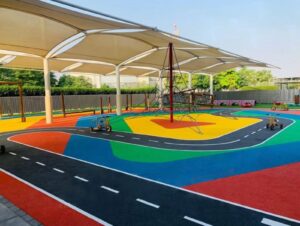
The tartan court used in basketball, handball, volleyball and multi-purpose stadiums, as well as in athletics track and children’s play areas (KidsArea) is one of the most important innovations in the world of modern sports, transforming the experience of athletes and the quality of sports performance. Combining science, engineering and sport, this cutting-edge technology represents the pinnacle of sports field surfaces, providing an ideal environment for training and competition at the highest levels.
Tartan is not just a running surface, it is an integrated system designed with scientific precision to achieve the best possible sports performance while ensuring maximum safety for athletes because tartan is one of the best solutions used in basketball, handball, volleyball and multi-purpose fields as well as in track and field and children’s play areas (Kids Area) and is known for its outstanding slip and abrasion resistance used outside and inside with easy maintenance. These systems offer high flexibility and protection and also guarantee excellent acoustic comfort, perfect mechanical resistance, long life, very safe for children and comfortable for players. This type of playground combines flexibility and stability, comfort and durability, beauty and functionality, making it the first choice of leading sports organizations around the world.
The evolution of tartan pitches over the past decades has seen continuous improvements in materials, manufacturing techniques, and installation methods, resulting in advanced generations of tartan pitches with superior characteristics that meet the needs of modern sports. Today, advanced materials such as modified polyurethane, high-quality recycled rubber, and specialized additives that improve performance and durability are being used.
Investing in a high-quality tartan field is a long-term investment in the future of sports, as these fields last for decades with proper maintenance and provide an ideal sporting environment that helps athletes achieve their best. These stadiums are capable of hosting various types of sports, from athletics to soccer and other team sports.
In this comprehensive guide, we’ll explore all aspects of tartan courts, from the basic techniques and materials used to the latest innovations and developments in the field. We’ll also cover international standards, best practices in design and implementation, and how to choose the right type of tartan court for your needs and budget
Our Facebook page
Basic Tartan Playground Techniques
Understanding the underlying technologies of tartan pitches is essential for anyone considering the creation or development of a modern sports pitch. These technologies have evolved through decades of research and development, and today combine the latest materials and engineering techniques to provide superior sports surfaces.
Material composition and multilayers
A modern tartan court consists of a multi-layer system, each layer has a specific function that contributes to the overall performance of the court. The bottom layer usually consists of asphalt or plain concrete, which provides a solid and stable foundation for the court. This layer must be precisely designed to withstand various loads and provide proper water drainage.
SPR On top of the base layer, one or more layers of specialized rubber materials are applied, known as an absorption or damping layer. Typically made from recycled rubber granules mixed with specialized binders, this layer is responsible for providing the elastic properties of the pitch that minimize the impact of shocks on athletes’ joints.
is the one that interacts directly with athletes’ feet. This layer is made from a fine blend of EPDM. The top layer, known as the running layer or finish surface, is made from high-quality polyurethane new rubber granules and soft rubber granules colored in attractive and beautiful colors and UV stabilizers. The composition of this layer determines the final playground characteristics such as traction, flexibility, and wear resistance.
Some advanced types of tartan pitches include additional specialized layers, such as thermal insulation layers or moisture control layers. These additional layers improve the pitch’s performance in different weather conditions and extend its lifespan.
Manufacturing and mixing techniques
The manufacturing process of tartan playground materials requires meticulous mixing and preparation to ensure consistent, high-quality properties. The raw materials are carefully selected, as the quality of the rubber used, the type of polyurethane, and the purity of the additives all affect the final performance of the playground.
The mixing process takes place in specialized factories using precise equipment that ensures the homogeneous distribution of the various ingredients. Temperature, humidity, and mixing time are all critical factors that must be precisely controlled to get the perfect mix. Some manufacturers use vacuum mixing techniques to remove air bubbles and ensure consistent density.
Advanced coloring techniques allow for the production of brightly colored, fade-resistant courts. The pigments used must be resistant to UV rays, chemicals, and corrosion from heavy use. Some advanced types use layered coloring techniques that provide more stable and beautiful colors.
Application and installation systems
Applying a tartan court requires high technical expertise and specialized equipment to ensure a homogeneous and high-quality surface.
On-site application is done in several stages, starting with preparing the base surface and cleaning it from any impurities or materials that may affect the adhesion. An initial layer of adhesive is then applied, followed by an absorbent layer that is carefully spread and tamped to ensure the required density and homogeneous thickness.
The final coat is applied using specialized spraying equipment or precision straighteners, taking care to obtain a uniform thickness and proper smoothness. The application process requires favorable weather conditions, as high humidity or temperature extremes may affect the quality of the final result.
International Specifications and Standards
Tartan pitches must adhere to strict international standards to ensure the safety and performance required for sports competitions at all levels. These standards are set by specialized international sports organizations and are constantly updated to keep up with technical and scientific developments.
IAAF Standards
The International Association of Athletics Federations (IAAF) has established comprehensive and detailed standards for tartan track used in official competitions. These standards cover all aspects of the track from physical properties to dimensions and allowed colors. The standards specify the required levels of hardness, rebound coefficients, and slip resistance that the track must achieve.
Thickness standards vary depending on the type of use, with international competition pitches requiring greater thickness than regular training pitches. The standards also specify drainage requirements, as the field must be able to drain a certain amount of water at a given time to ensure all-weather usability.
Quality and performance tests should be conducted regularly to ensure that the pitch continues to meet the required standards. These tests include measuring hardness, bounce, abrasion resistance, and color fastness. The results should be within the ranges specified in international standards.
Safety and security standards
Safety standards for tartan pitches focus on protecting athletes from injuries and ensuring a safe environment for training and competition. These standards specify the levels of shock absorption required to minimize stress on athletes’ joints, especially knees and ankles, which are subjected to high stresses during running and jumping.
Slip resistance is another critical criterion, as the surface must provide enough traction to prevent slipping without being so excessive as to impede natural movement. This delicate balance requires specialized design and advanced manufacturing techniques.
The standards also require that the materials used are non-toxic and safe for human use, even in the case of direct contact or accidental inhalation. This is especially important in indoor stadiums where ventilation may be limited.
Environmental and sustainability standards
Modern environmental standards require tartan pitches to be environmentally friendly and sustainable. This includes using recycled materials wherever possible, minimizing harmful emissions during manufacturing and installation, and ensuring recyclability at the end of the court’s lifespan.
Energy efficiency in manufacturing and assembly processes is becoming an important criterion, favoring technologies that require less energy and produce fewer emissions. Some manufacturers are using renewable energy in their factories to reduce the carbon footprint of their products.
Water management is another environmental criterion, as tartan courts must be designed to minimize runoff and optimize water infiltration into the soil. Some advanced designs include rainwater collection and reuse systems.
Types of tartan playgrounds and their applications
Tartan courts vary to meet different needs, from simple training courts to high-level international competition courts. Understanding the different types and their applications helps in choosing the right one for your project and budget.
PU MIX tartan playgrounds
Implemented in basketball, handball, volleyball and multi-purpose stadiums, they represent the pinnacle of technological advancement in the field. These PU MIX tartan courts feature superior specifications that meet the highest international standards and provide exceptional performance for professional athletes. The overall thickness of these courts is greater, providing better shock absorption and improved resilience.
The materials used in these stadiums are of the highest grade, with special emphasis on consistency in physical properties across the entire surface. This consistency is essential to ensure fairness in competitions, as any variation in surface properties can affect athletes’ performance and race results.
Drainage systems in professional-use stadiums are more sophisticated, with the ability to handle heavy rainfall without affecting usability. This is especially important for outdoor stadiums that host important competitions that cannot be postponed due to the weather.
The colors and markings in these stadiums follow precise standards set by international sports federations. These markings must be durable and corrosion-resistant, with bright and clear colors that help athletes, referees and spectators.
اقرأ المزيد..ملاعب padel
Tartan playgrounds for schools and universities
Tartan playgrounds for educational institutions focus on providing a safe and suitable environment for training and various sports activities. These courts need to withstand intensive use by large numbers of students with different skill levels, requiring high durability and abrasion resistance.
The flexible design of these courts allows them to be used for multiple sports activities, from athletics to team games such as soccer and basketball. This versatility requires a balanced surface that provides good performance for all activities without favoring one over the other.
Safety considerations are a top priority in educational institution playgrounds, where users may be less experienced than professional athletes. The surface must provide additional protection from injuries while maintaining the required athletic performance.
Simple maintenance and affordability are important factors for educational institution playgrounds, as maintenance budgets can be limited. Therefore, materials and specifications are chosen that strike a balance between performance and total cost of ownership.
Multi-Use Tartan Courts
Multi-use fields are an ideal solution for communities and facilities that need to host a variety of sporting activities in one space. They require a specialized design that takes into account the requirements of different sports and provides acceptable performance for all of them.
Flexibility in design includes the ability to change signs and fonts depending on the activity, using materials and colors that allow for this variety without visual clutter. Some advanced designs use removable or changeable marking techniques.
Durability and resistance to wear and tear is higher on these courts due to the intensive and varied use. The materials used must withstand different types of sports shoes and equipment without rapid deterioration in performance or appearance.
Maintenance systems for these playgrounds are designed to handle the variation in usage patterns and wear and tear. This requires maintenance programs that are flexible and adaptable to the changing needs of the playground.
Advanced technologies and innovations
The tartan field is constantly evolving with new technologies and innovations that improve performance, sustainability and efficiency. These developments are pushing the boundaries of what is possible in the design and manufacture of sports fields.
Smart Material Technologies
Smart materials represent the latest advancements in tartan pitches, as these materials react to ambient conditions to automatically optimize performance. Temperature regulating materials help maintain proper surface temperature even in extreme weather conditions, improving athlete comfort and performance.
Monitoring and diagnostic systems
Monitoring systems built into modern tartan pitches provide continuous information on the condition and performance of the pitch. Built-in sensors monitor factors such as temperature, humidity, wear level, and pressure distribution across the surface. This information helps optimize maintenance programs and anticipate the need for repairs before major issues occur.
Advanced imaging techniques use high-resolution cameras and image analysis to monitor changes in the pitch surface over time. This analysis can reveal areas of early wear or changes in physical properties before they become visible to the naked eye.
Predictive diagnostic systems use AI and data analysis to predict future maintenance needs based on usage patterns and environmental conditions. This helps improve maintenance efficiency and reduce overall costs.
Environmental sustainability technologies
Environmental sustainability has become a key focus in the development of modern tartan pitches, with a focus on minimizing environmental impact throughout the pitch’s lifecycle. Advanced recycling technologies allow higher percentages of recycled materials to be used without compromising performance or quality.
Integrated water management systems collect and treat rainwater falling on the stadium, minimizing runoff and providing water for irrigation or other uses. These systems include specialized drainage layers and underground collection tanks.
Selection and design factors
Choosing the right type of tartan court and its design requires a thorough consideration of multiple factors that affect performance, cost and sustainability. These factors interact with each other in complex ways, requiring specialized expertise to achieve the best results.
Analyze needs and expected usage
Determining the actual needs of the stadium is the first and most important step in the design process. The type of sports the stadium will host, the level of competition expected, and the number of expected users all used for basketball, handball, and volleyball PU MIX courts are factors that influence the required specifications. A stadium dedicated to professional athletics needs a completely different specification than the tartan, multi-court or tartan used for children’s play areas (KidsArea).
The expected intensity of use influences the choice of materials and the level of durability required. High-intensity playgrounds require more corrosion-resistant materials and more sophisticated maintenance systems. This analysis helps determine the appropriate balance between initial cost and long-term operating costs.
Special performance requirements, such as shock absorption levels or rebound coefficients, must be precisely determined based on the type of use expected. These requirements affect the design of the different layers and the composition of the materials used.
Local climate and environment considerations
Local climatic conditions play a crucial role in tartan playground design and material selection. Maximum and minimum temperatures, humidity levels, amount of precipitation, and UV intensity all affect the performance and durability of the playground.
In hot regions, choose materials that are resistant to high heat and treated against UV rays to prevent deterioration and fading. Light colors may be preferred to reduce heat absorption and improve comfort for athletes.
Areas with heavy rainfall require more sophisticated drainage systems and slip-resistant surfaces even in wet conditions. The materials used must resist waterlogging and repeated freezing and thawing in cold regions.
Strong winds and sandstorms in some areas require surfaces that are resistant to corrosion from airborne particles. This may require special surface treatments or additional protective layers.
Integration with existing infrastructure
The design of a tartan stadium must integrate seamlessly with the existing infrastructure at the site. Drainage systems, power grids, and access roads are all factors that need to be considered during design.
The natural topography of the site affects the design of the required drainage and grading systems. Sloping sites may require additional grading or special designs to take advantage of the natural slope for drainage.
Proximity to other buildings and facilities affects the choice of materials and colors to ensure visual and functional consistency. This proximity may also affect safety and fire protection requirements.
Maintenance and long-term care
Proper maintenance of a tartan pitch is essential to ensure continued high performance and extend the life of the pitch. A comprehensive and regular maintenance program can double the life of the field and maintain its essential properties for decades.
Preventive maintenance programs
Preventive maintenance focuses on preventing issues before they occur through regular inspection and ongoing care. Regular cleaning removes dirt and contaminants that may affect surface performance or cause premature deterioration. This cleaning should be done using appropriate materials and equipment that will not damage the surface.
Inspecting cracks and surface damage should be done regularly, as early repair of small issues prevents them from developing into large and costly issues. This inspection includes looking for signs of corrosion, loss of elasticity, or changes in color or texture.
Maintenance of drainage systems is essential to ensure proper performance in all weather conditions. Cleaning drains and removing blockages prevents water from pooling on the surface, which can damage the pitch or create unsafe conditions for use.
Damage Repair and Renovation
When damage occurs on a tartan court, quick and proper repair is essential to prevent the issue from worsening. Repair techniques vary depending on the type and extent of damage, from simple surface repairs to replacing entire sections of the pitch.
Small cracks can be repaired using materials that match the original surface, taking care to achieve a match in color and texture. This type of repair requires technical expertise to ensure a homogeneous and durable result.
Severely damaged areas may require complete removal and reapplication of the damaged layers. This type of repair is more complex and requires specialized equipment and materials, as well as expertise in application techniques.
Periodic renovation programs help maintain the appearance and performance of the playground over the long term. This may include repainting lines and markings, resurfacing, or upgrading parts of the stadium to meet new standards or updated requirements.
Conclusion and recommendations
A tartan court represents the pinnacle of sophistication in sports surfaces, combining science, technology and engineering to provide an optimal environment for athletic performance. In this comprehensive guide, we’ve covered all the important aspects of tartan pitches, from the basic technologies and materials used to the latest innovations and developments in the field.
Investing in a high-quality tartan stadium is a long-term investment in the future of sports and public health. These stadiums provide a safe and stimulating environment for athletes of all levels, from beginners to professionals, and contribute to the development of a sporting culture in the community.
Continuous developments in tartan court materials and technologies are opening up new avenues for improved performance and sustainability. Smart materials, advanced monitoring systems, and environmental sustainability technologies shape the future of the industry and offer endless possibilities for development and optimization.
Choosing the right type of tartan pitch requires a thorough study of the needs, local conditions and available budget. Collaboration with specialized experts in the field is essential to ensure that the right decisions are made and the best results are achieved.
Proper and regular maintenance is the key to the long-term success of any tartan court. Investing in comprehensive and specialized maintenance programs ensures that high performance is maintained and the lifespan of the stadium is prolonged, bringing the best value for the investment.
With the rapid growth in interest in sports and health in the Arab region, the need for high-quality tartan stadiums that meet international standards and provide an ideal environment for training and competition is increasing. This represents a huge opportunity to invest in this area and develop sports infrastructure.
About Technotrade Sports:
years in the field of specialized sports fields. We offer comprehensive solutions 15Technotrade Sports is a leader in the design and implementation of tartan courts in Egypt and the Middle East, with experience that includes consulting, design, implementation, and maintenance of all types of tartan courts.
Our team of specialized engineers and experts keep abreast of the latest technical developments in the field of tartan pitches and apply global best practices to ensure the delivery of pitches that meet the highest international standards. We are proud of our track record of successful projects that serve the sports community in the region.
For expert advice on tartan pitches or to discuss your next project, get in touch with us today. We’re here to help you turn your vision into a sporting reality.
 Are You Looking for the Best Solutions to Equip your Fields with Artificial Turf?
 Call us now |
  Contact us via WhatsApp |